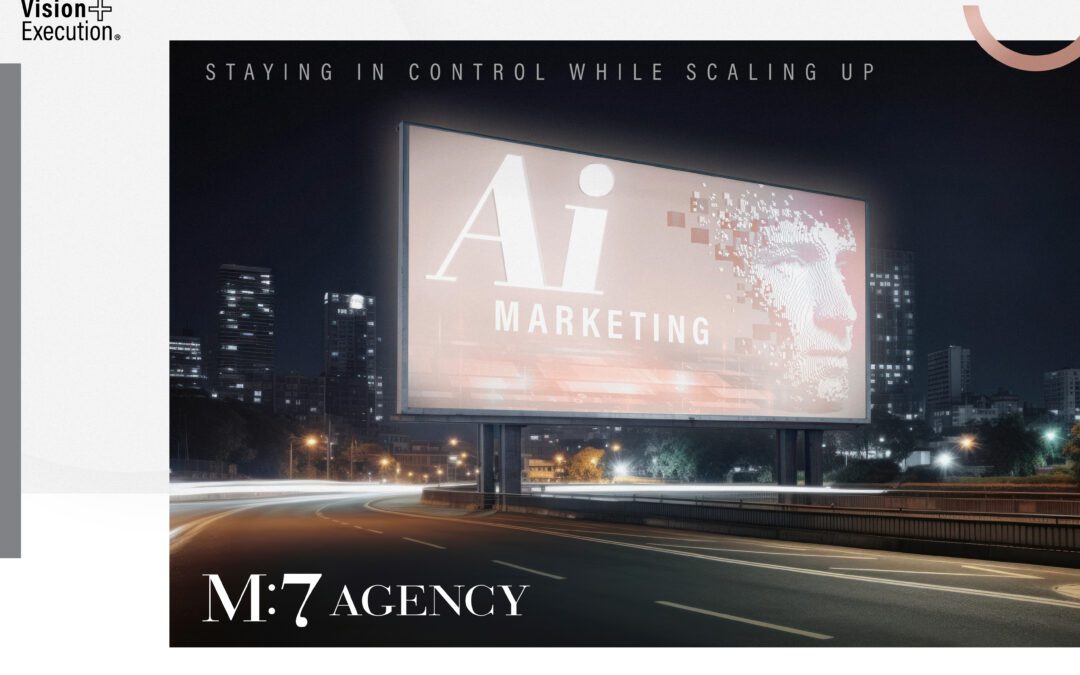
Striking the Right Balance Between Efficiency & Originality When Incorporating AI
Artificial intelligence has quickly become one of the most talked-about forces in our culture, affecting all aspects of our lives, including marketing. From automated content generation to predictive analytics and customer segmentation, AI offers tools that can dramatically improve efficiency and scale. But as powerful as these technologies are, they also raise an important question: how can marketers embrace AI without losing the human creativity, judgment, and authenticity that make great marketing effective?
The answer lies in balance. AI should be viewed not as a replacement for marketers, but as a tool that enhances their capabilities. When used strategically, it can free up time, sharpen insights, and improve execution without taking over the creative and relational aspects that define strong brands.
AI as a Tool, Not a Strategy
One of the most common mistakes organizations make is treating AI as a marketing strategy in itself. In reality, AI is simply a tool that supports broader objectives. Successful marketing still begins with a clear understanding of audience, positioning, messaging, and goals. AI can help execute those strategies more efficiently, but it cannot define them.
Marketers who rely too heavily on AI-generated content or automated decision-making risk producing work that feels generic or disconnected from their brand voice. Without human direction, AI tends to default to patterns and averages, which can dilute originality and weaken differentiation. The most effective teams use AI to support their strategy, not replace it.
Protecting Brand Voice & Authenticity
Brand voice is one of the most valuable, yet vulnerable, assets a company has. It reflects personality, values, and the way a brand connects with its audience. While AI tools can generate copy quickly, they often require careful editing to ensure consistency and authenticity.
If left unchecked, AI-generated messaging can sound overly polished, repetitive, or lacking in nuance. This is especially risky for brands that rely on storytelling, emotional connection, or a distinct tone. Human oversight is essential to refine messaging, inject personality, and ensure that every piece of content aligns with the brand’s identity.
The goal is not to avoid AI-generated content altogether, but to treat it as a starting point rather than a finished product. Marketers should shape, edit, and elevate what AI produces, ensuring it meets the same standards as any human-created work.
Enhancing Efficiency Without Sacrificing Creativity
One of AI’s greatest strengths is its ability to handle repetitive and time-consuming tasks. Data analysis, keyword research, performance tracking, and even first-draft content creation can all be streamlined through AI tools. This allows marketing teams to spend less time on manual processes and more time on high-value work.
That shift is where the real opportunity lies. With AI handling the operational load, marketers can focus on creative thinking, campaign development, and strategic planning. Instead of replacing creativity, AI can create more space for it.
However, this only works if organizations resist the temptation to use AI solely as a cost-cutting measure. If the goal becomes producing more content faster without improving quality, the result is often a flood of mediocre material that fails to engage audiences. Efficiency should support better marketing, not just more of it.
Maintaining Human Judgment
AI can analyze vast amounts of data and identify patterns that would be difficult for humans to detect. It can suggest optimal send times, predict consumer behavior, and recommend content topics based on trends. But it cannot fully understand context and nuance in the way people can.
Marketing decisions often require judgment calls that go beyond data. Tone, timing, and messaging can all be influenced by factors that are difficult to quantify. A campaign that looks perfect on paper may fall flat if it misses the emotional or cultural moment.
Human oversight ensures that AI-driven insights are applied thoughtfully. Marketers must interpret data, question assumptions, and make final decisions based on both analytics and experience. AI can inform decisions, but it should not make them in isolation.
Building a Sustainable Approach to AI in Marketing
Integrating AI into marketing is not about adopting every new tool or automating every process. It is about building a thoughtful approach that aligns with the brand’s goals and values. This includes setting clear boundaries for where AI is used, maintaining quality control, and ensuring that human creativity remains at the center of the work.
Organizations that succeed with AI are those that treat it as a collaborator rather than a replacement. They invest in training their teams to use AI effectively while reinforcing the importance of original thinking and strategic direction.
The Human Element Still Wins
At its core, marketing is about connection. It is about understanding people, telling stories, and building trust over time. While AI can support these efforts, it cannot replicate the human insight and creativity that drive meaningful engagement.
By embracing AI as a tool, not a replacement, marketers can unlock new levels of efficiency and insight without sacrificing what makes their work impactful. The future of marketing is not human versus machine. It is human and machine working together, with people still firmly in control.
For human-driven strategies and execution, M:7 Agency offers the experience and expertise to do all the things AI cannot. Talk to us today about your unique marketing needs and what our human touch can do for your brand.